
The Hard Truth
Unvarnished insights and strategic analysis on why defense contractors win and lose in the digital battlespace.

Federal Civilian Agencies Have the Same Digital Credibility Problem as Defense Contractors, and Most Still Underestimate It
Federal civilian agencies and the intelligence community do not judge vendors like normal commercial buyers. They judge for risk. If your website looks vague, commercial, generic, or thin, you are signaling risk in a market built around scrutiny.

Defense Companies Have a Digital Credibility Problem, and Most Do Not Know It Yet
In the defense industry, your website is a credibility screen. It tells primes, government buyers, contracting teams, capture leaders, mission partners, and evaluators whether your company feels serious, disciplined, and ready for real work.

Aerospace Companies Have a Website Problem They Do Not Realize Is Costing Them Trust
In aerospace, your website is a credibility filter. It shapes how buyers, partners, primes, investors, program teams, and mission stakeholders judge your seriousness before a conversation ever starts.
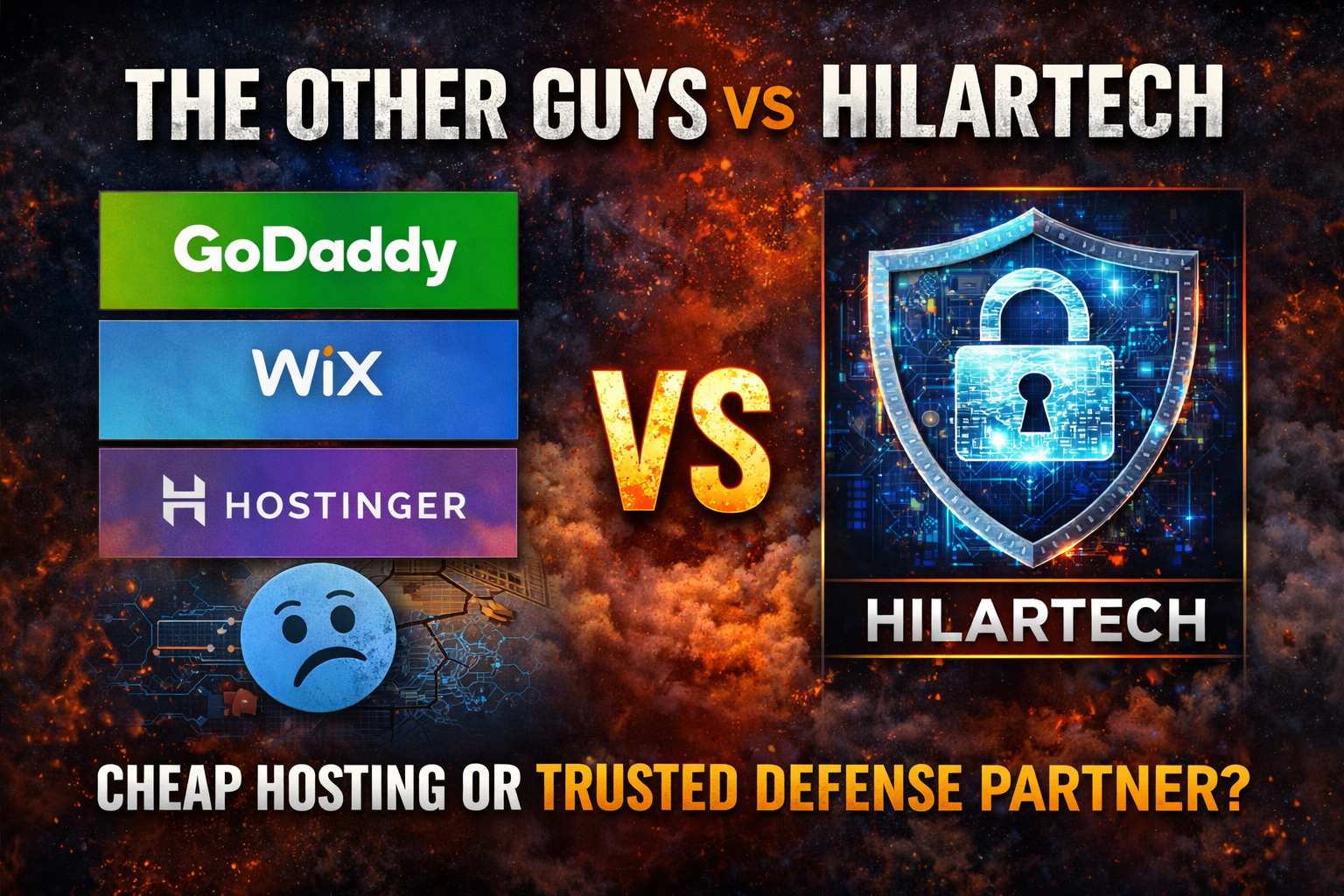
The Other Guys vs HILARTECH Hosting
Most website hosting companies are built for mass market convenience. HILARTECH hosting is built for credibility, control, resilience, and security.

The Hidden Fee Game Behind GoDaddy, Hostinger, Wix, and Similar Platforms
Cheap hosting is rarely cheap. That low number on the homepage is usually a teaser rate, followed by renewals, separate subscriptions, and security upsells.

The Hard Truth Behind the FY27 Defense Budget Surge
The Pentagon is not whispering where the money is going. It is shouting it.

The Defense Contractor Website Test No One Talks About
There is a website test no one in defense says out loud, but everyone with experience is running in their head. If you confuse a serious buyer, they start asking: If they can't organize their story, how well do they organize real work?

The Unspoken Reason Your Website Is Not Helping Business Development
Most defense contractors think BD stalls because of competition or timing. But there is another problem: your website isn't helping your team carry the deal forward.

Why COOs Read Digital Confusion as Execution Risk
In the high-stakes defense corridor of Northern Virginia, a confusing website isn't just a marketing flaw—it's a predictive signal of operational risk.

The Cost of Confusing a Contracting Officer in the First 15 Seconds
If a contracting officer lands on your website and cannot understand who you are within 15 seconds, you are creating friction at the exact moment you should be building trust.

The Student Became the Teacher: How Ukrainian PATRIOT Crews Are Reshaping U.S. Air Defense Doctrine
Ukrainian operators have become so proficient with the MIM-104 PATRIOT air defense system that the U.S. Army is now formally studying their employment techniques.

The Air Force Is Not Buying Software. It Is Hunting for a Team That Can Clean Up a 700,000 Person Mess Without Breaking the Mission.
This Air Force call is not just another white paper notice. It is a signal flare. The Department of the Air Force is telling industry that bloated, fragile, disconnected enterprise HR environments are now a mission problem, not just an IT problem.

This is bigger than a $52 million drone order
The Army just showed industry what gets funded fast at scale: proven battlefield relevance, fast operator adoption, resilience in contested environments, commercial production capacity, and a procurement path that reduces friction.

Terafab Changes the Game for Compute, Autonomy, and U.S. Industrial Power
Elon Musk’s reported Terafab project in Austin is not just another factory announcement. It is a warning shot to every company building in AI, robotics, autonomy, aerospace, and defense.

Ohio Contractors Need Relevance for Arsenal 1
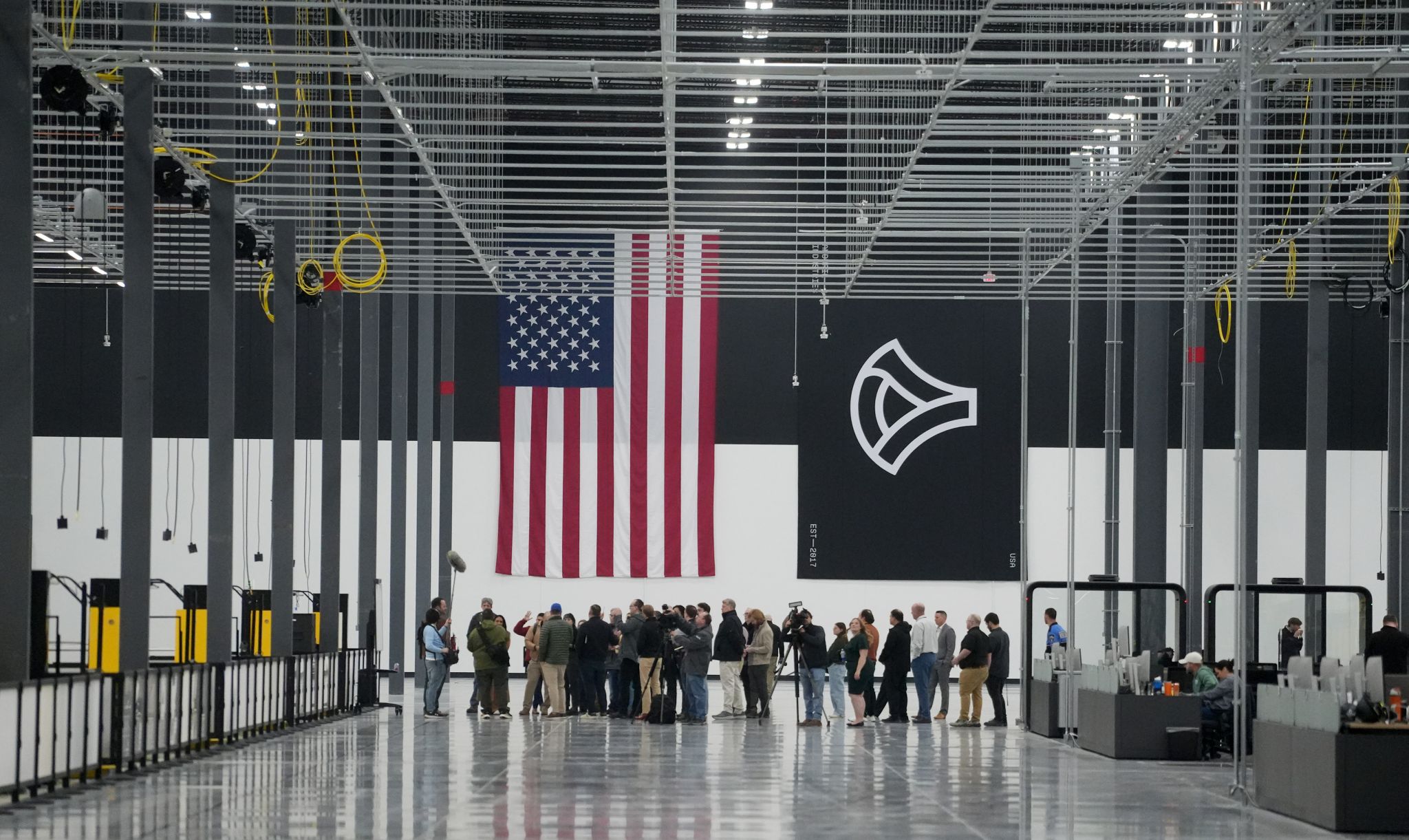
Anduril’s Arsenal 1 is not a local ribbon cutting story. It is a market signal. Ohio defense contractors that want to support Arsenal 1 need more than a decent capability statement. They need a modern website.

Arsenal 1 Is a Warning Shot to Defense Base
Anduril’s Arsenal 1 in Ohio is more than a $1 billion manufacturing site. It is a visible signal that the next phase of defense contracting will be won by companies that can connect software, AI, robotics, autonomous systems, and production at real scale.
Navy's Move to Anduril's Dive-XL Is a Signal
The U.S. Navy and the Defense Innovation Unit selected Anduril for the Combat Autonomous Maritime Platform program, putting the company’s Dive-XL extra large autonomous underwater vehicle into a fast moving effort to prototype and field long range undersea autonomy.

Aerospace Manufacturing Is Scaling Fast
The aerospace manufacturing market in 2025 and 2026 is not being shaped by small orders or speculative concepts. It is being driven by large production awards, sustainment contracts, propulsion buys, radar modernization, and supplier capacity expansion.

Aerospace Modernization Is a Live Contract Map
The first quarter of 2026 made one thing clear: aerospace modernization is being funded through real contracts tied to radar replacement, military propulsion, special operations avionics software, and electronic warfare survivability.

Federal Drilling Is Back at Scale
The Trump administration is not making a symbolic move on federal drilling. It is reopening the map. The Interior Department’s 11th National OCS draft proposed program proposes 34 potential offshore lease sales across about 1.27 billion acres.

Nuclear Power Returns to US Industrial Strategy
The federal government is no longer treating nuclear power like a long term policy aspiration. By early 2026, it is using executive orders, federal financing, fuel supply contracts, and high profile public private partnerships to push nuclear back into the center of American energy, industrial, and AI infrastructure strategy.

Federal Land Is Becoming AI Territory
The federal government is no longer talking about AI infrastructure in abstract policy language. It is opening federal land, accelerating permitting, structuring long term lease models, and inviting private capital to build some of the largest data center and power projects in the country.

Critical Infrastructure Is the Main Battle
By March 2026, the critical infrastructure story is no longer about patching weak points. It is about rebuilding national staying power across water, energy, defense protection, and industrial resilience.

ITAR Just Got Harder Again for Defense Firms
The 2025 to 2026 ITAR changes are not minor cleanup. They mark a real shift back toward broader State Department control over defense related technology, parts, and systems.

Coast Guard Is Rebuilding the Force
The Coast Guard is no longer making small repair moves around an aging fleet. It is putting real money into icebreakers, offshore patrol cutters, waterways commerce cutters, rotary wing aviation, robotics, unmanned systems, and mission support infrastructure.

The Air Force Is Buying Execution, Not Vendors
The March 2026 Air Force contract activity says something bigger than “money is moving.” It says the Air Force is putting real weight behind logistics throughput, software delivery environments, digital engineering, propulsion sustainment, and operational movement.

Air Force Buys Throughput & Software Velocity
The Air Force is not sending a vague modernization signal. It is putting money behind the systems that keep global movement, mission software, digital engineering, and aircraft sustainment running at scale.

The Army Is Buying Control, Not Point Solutions
The Army is moving toward enterprise scale buying, software defined capability delivery, and industrial base modernization at the same time.

Navy Shipbuilding Money Is a Market Signal
The Navy is not sending a soft signal. It is putting real money behind submarines, autonomous maritime systems, logistics vessels, and shipyard infrastructure.

The Hard Truth About Defense Supply Chains
The Supermicro linked indictment is not just a headline about alleged chip smuggling. It is a direct warning to every prime and subcontractor working around export controlled hardware, sensitive defense programs, advanced computing, restricted technical data, or ITAR exposed environments.

The CMMC Effect: How Cybersecurity Compliance is Reshaping the Defense Industrial Base
The Cybersecurity Maturity Model Certification (CMMC) is no longer a distant requirement; it is an immediate operational reality for the Defense Industrial Base (DIB).

FAA Awards $295M to 8(a) Firms
The FAA awarded a 7 year contract worth up to $295 million to Quecon through an 8(a) set aside competition, and only three proposals were submitted. That is not just a contract story. It is a market signal.

Aerospace Companies Chasing Avio USA Opportunity
AVIO USA’s new solid rocket motor facility in Hurt, Virginia is not just a plant announcement. It is a market signal. If you are an aerospace company hoping to team up around this ecosystem, your website cannot look generic, thin, or vague anymore.

Space Force Intelligence Facility Sources Sought
The government is shaping the field before the formal competition. Firms that look digitally credible right now have an advantage over firms that still look generic, stale, or hard to place.
GovCon Faces Dangerous False Claims Environment
This is not a minor legal cleanup. It is a warning. The SBA’s March 2026 rule aligns its regulations with the Administrative False Claims Act and expands the administrative fraud framework in ways contractors should take seriously.
Space Subcontractors Need a Website Rebuild
If you want to team under major space and missile defense primes, the smartest move is not sending more cold emails. It is rebuilding your website so a prime can place you fast.

The Hard Truth About Aerospace Websites
In aerospace, a weak website does not make you look lean. It makes you look risky.

SAM.gov Changes Require Dynamic Websites
The March 24, 2026 SAM.gov modernization is not just a platform update. It reflects a deeper procurement shift.

Prime Awards Are Subcontractor Opportunity Maps
Big March 2026 awards are not only stories about who won. They are signals about where serious subcontracting demand is forming.

Subcontractors Shouldn't Claim to "Do It All"
The asymmetric move for a subcontractor is not to look bigger than it is. It is to look easier to place.

Insecure Websites Undermine Cyber Claims
If your company talks about cyber resilience but your public website is poorly maintained, you are creating a trust problem before the first meeting.

"We Support the Warfighter" Is Weak Messaging
When everyone says the same patriotic line, it stops creating distinction and starts creating camouflage.

Cheap Templates Make Your Firm Look Small
A cheap website template does not make your company look lean. It often makes your company look underbuilt.

Past Service Doesn't Replace Marketing
Past service builds credibility. It does not explain commercial value. If you do not explain your value clearly, the market fills in the gaps for you.

SDVOSB Status Brings Access, Not Wins
SDVOSB status can open doors. It does not carry you through them. It does not create buyer trust, technical fit, delivery confidence, or differentiation.
Show Contract Management Maturity Online
A lot of defense contractors are better operators than their websites make them look. That is the problem. GAO’s 2025 priority recommendations for DoD still point to broad management weaknesses.

Is Your Counterparty Screening Too Thin?
A lot of defense contractors screen the obvious party, then stop too early. That is the problem. DFARS does not only care about the name on the front of the proposal.

Clarity Is Your Secret Weapon in GovCon
Confusion is not a minor inconvenience in defense contracting. It is a growth barrier. When the entry points are already hard to navigate, the contractor that makes itself easy to understand gains a real advantage.

Your SAM Profile Is Not a Growth Strategy
SAM registration is required, but it is not a growth strategy. It gets you into the system. It does not make you visible, credible, or compelling.

Export Control Sloppiness Destroys Trust
In defense and aerospace, export control sloppiness does not look like a minor compliance miss. It looks like operational immaturity.
Aerospace Buyers Want Resilience, Not Just Tech
Aerospace buyers are no longer judging suppliers on technical competence alone. They are judging whether a company can keep delivering when labor tightens, materials run short, suppliers slip, and schedules get compressed.

Supply Chain Opacity Is a Contract Risk
In federal, defense, and aerospace contracting, supply chain opacity is no longer a back office weakness. It is becoming a contract risk.

How to Prove Teaming Strength in GovCon
In defense contracting, teaming is not a side note. It can be part of the evaluation. If your website only talks about your company in isolation, you are making your team look thinner than it really is.
How Federal Buyers Actually Research You
In federal, defense, and aerospace contracting, the competition often starts before the solicitation is released. If your website is weak, vague, or outdated, you can lose ground during the research phase.
Systemic Operational Design in Defense
How a Defense Contractor Consultant Could Frame an Unconventional Solution for the U.S. Navy.
The Hidden Risk of Outsourcing GovCon Websites
Outsourcing website work overseas is not simply a staffing choice. It can become an export control issue, a CUI protection issue, a cybersecurity issue, and a leadership judgment issue.
The Subcontractor Trap: Support vs. Strategic
The hard truth about why subcontractors get stuck in support roles and how to build a business that feels strategically hard to replace.
"Professional Enough" Is a Losing Strategy
For a lot of defense contractors, "professional enough" feels like a reasonable standard. But in federal defense markets, it is often another way of saying invisible.
Primes Won't Risk Capital on Weak Teammates
A prime contractor is not only choosing capability. They are choosing who they are willing to defend inside their own company.
Weak Aerospace Websites Signal Supplier Risk
In aerospace, nobody has time to guess what kind of company you really are. Why primes read weak sites as a risk signal.
"Mission Ready" in a Cheap Template Fails
When words like Mission Ready sit inside a weak visual shell, they stop sounding like confidence and start sounding like costume jewelry.
Buyers See Bad Websites as Operations Problems
In federal, aerospace, and defense markets, presentation is never only presentation. It becomes a signal.
Digital Credibility Is Now Due Diligence
A quieter form of due diligence now happens much earlier. It starts the moment someone types in your company name.
Past Performance Won't Save a Weak Website
Past performance proves history, not present clarity. Why the gap matters more than many leaders want to admit.
Stop Looking Like a Small Business Online
A strong company can still look weak online. In defense markets, looking small is expensive.
A Bad Website Screams "Do Not Award"
The cost of looking like a forgotten subcontractor online. Why weak digital presence signals weak business readiness.
Digital Trust: The Secret to ITAR Selection
In ITAR sensitive work, trust starts online. Learn how digital presence affects risk screening and partner selection for defense contractors.
Why Primes Skip Your Missile Tech Firm
Why weak digital presence signals weak business readiness for missile technology companies and how it impacts prime contractor trust.
Why Primes Ignore Your C-UAS Website
Why C-UAS companies need a cutting-edge defense website and precision marketing tools to win tactical logistics and sustainment hub work.
Stop Guessing: Precision Marketing for GovCon
Advanced digital marketing strategies for targeting government evaluators and primes.
Your Website Is Actively Costing You Contracts
Why traditional web design fails federal contractors and how to fix it.
Market Analysis | Federal Sector Insights
Deep dive into federal market trends and strategic capture opportunities.
Strategic Insights | GovCon Intelligence
Intelligence and analysis for federal and defense contractors serious about growth.
Why Your BD Team Is Losing (And How to Fix It)
Understanding the digital gaps that cause federal business development teams to lose contracts.
Ready to upgrade your digital presence?
See how we build high-fidelity digital capture environments for federal and defense contractors that command attention and earn trust.
View Strategic Portfolio